

As a veterinarian, I regularly see animals hospitalized for ingesting seemingly harmless food. Understanding why some human products become dangerous to dogs and cats allows us to better prevent these incidents and act quickly when poisoning is suspected. 🐶🐱
Quick summary:
I help you spot dangerous foods and react quickly to protect your dog or cat. 🐶🐱
- Remember the main toxics: chocolate, grapes/raisins, onion/garlicstone fruit, raw potatoes, macadamia nuts et xylitol.
- Safe access: store high, close rubbish bins, use airtight containers, do not throw away leftovers onion, garlic or chocolate.
- Monitor them first signs : vomiting, diarrhea, lethargy; ⚠️ emergency in case of tremors, convulsions or abnormal heart rhythm.
- And suspected ingestion: call your vet without delay, specify the food, quantity and time; do not induce vomiting without notice; bring the packaging or a photo.
- Provide a daily warning: when walking, avoid refusal zones, learn to “leash”, offer occupational/olfactory games to limit rummaging. 🐾
Understanding toxic pet foods
Before detailing the list of substances to avoid, it is useful to provide clear definitions. This makes it easier to spot the signs and communicate with your vet.
Definitions of key terms
Toxic foods designates foods which, although palatable, can cause health problems for animals following ingestion. The effect depends on the dose, the species and the health status of the animal.
Food poisoning corresponds to all the clinical manifestations that follow the ingestion of a harmful product. These signs range from transient digestive upset to severe organ damage, depending on the substance and amount absorbed.
The most toxic foods for dogs and cats
Some foods intended for humans are regularly involved in emergency consultations. Knowing these foods helps limit risks at home.
List of common foods to avoid
The following list brings together the products frequently involved, with their known effects on dogs and cats.
- Chocolate : contains theobromine and caffeine. In dogs these alkaloids cause agitation, vomiting, tachycardia, tremors and sometimes convulsions. The severity depends on the type of chocolate and the weight of the animal.
- Grapes and raisins : can lead to acute renal failure, especially in dogs. The mechanisms are not completely clarified but the link with renal failure is documented.
- Onions and garlic : contain sulfur compounds that destroy red blood cells, causing hemolytic anemia. Effects may appear several days after ingestion.
- Stone fruits (apricots, peaches, cherries) : The nuclei contain cyanogenic glycosides. The meat is often tolerable in small quantities, but the pits pose a risk of cyanide release and digestive obstruction.
- Raw potatoes : contain solanine, which can cause digestive and neurological disorders. Cooking reduces solanine but large consumption of raw potatoes is not advisable.
- Macadamia nuts : In dogs they induce a transient neuromuscular disorder characterized by weakness, abnormal gait, tremors and hyperthermia.
Also, some sweeteners like xylitol (found in chewing gum and sugar-free products) cause the release of insulin in dogs, leading to severe hypoglycemia and liver damage. It is therefore useful to keep this information in mind, even if it was not listed above.
Why do animals eat toxic foods?
There are several behavioral and environmental reasons why a dog or cat ingests something that can harm it. Understanding these mechanisms helps prevent poisoning episodes.
Lack of dietary discernment
Animals do not distinguish between what is edible and what is dangerous by our standards. Their attraction is often driven by smell and texture rather than risk assessment.
Their lack of innate learning tackling new foods makes them more vulnerable to processed products or atypical ingredients like artificial sweeteners.
Easy access
Poisonings often occur because banned foods are left within reach, on a coffee table or in an open garbage can. Human practices therefore play a direct role.
As the owner, close and set aside delicate products greatly reduces the risk of accidental ingestion.
Opportunistic behavior
Dogs and some cats rummage through garbage cans, pick up scraps left on the ground, or eat plants and waste found on outings. This opportunistic behavior exposes people to unknown substances.
If your dog has swallowed a bone, consult a vet immediately as this can cause obstruction or damage to digestion.
Placing obstacles and monitoring during walks limits these episodes, preserving the animal’s food safety.
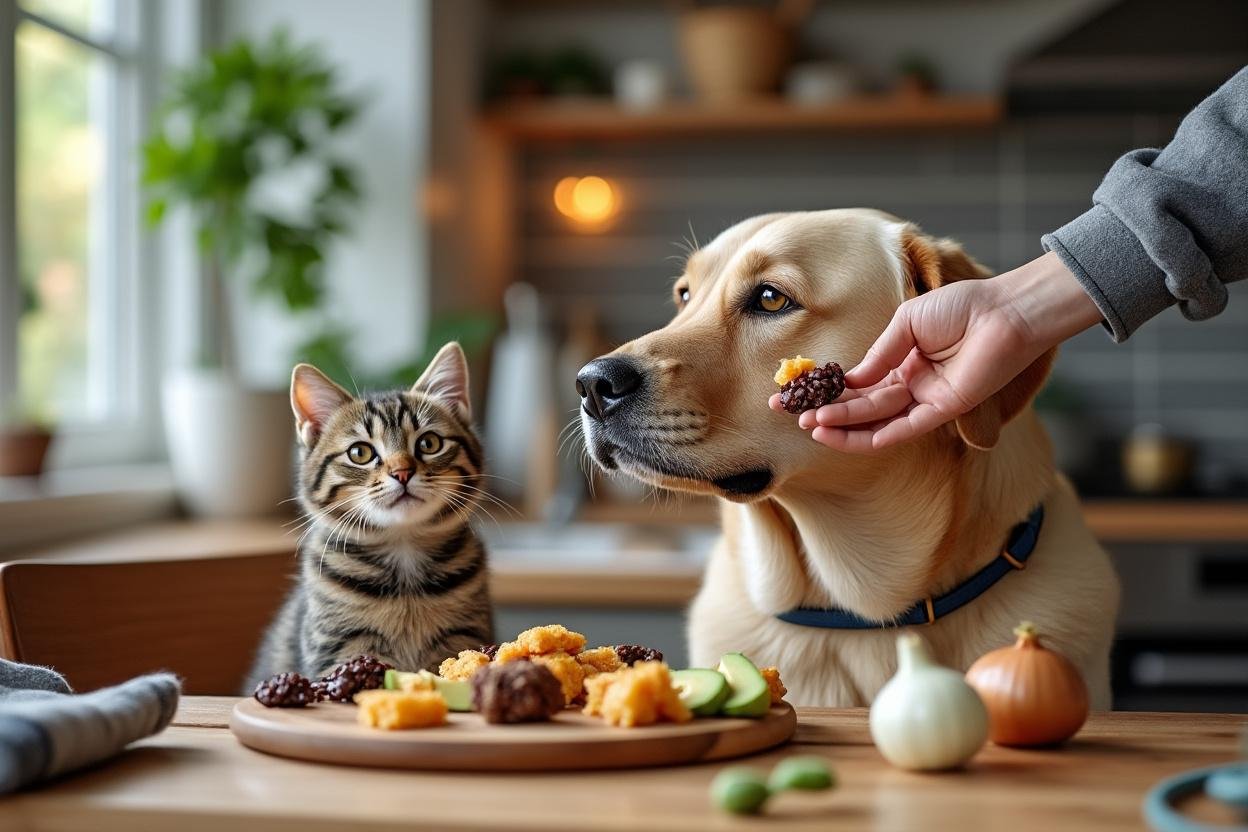
Deceptive appearance of food
Many human foods have attractive flavors or textures (sugar, fat), which encourage the animal to eat them despite internal risks. Chocolate, for example, is highly sought after for its taste and aroma.
What looks appetizing it is not necessarily safe and the sensory attraction may mask the toxic effect until the first signs appear.
The effects of ingesting toxic foods
The manifestations can be immediate or deferred. The following table summarizes the most frequently observed signs depending on the food in question.
Summary table of symptoms depending on the food ingested:
| Food | Common signs | Serious risks |
|---|---|---|
| Chocolate | Vomiting, diarrhea, restlessness, excessive thirst | Tachycardia, convulsions, heart failure |
| Grapes/raisins | Vomiting, lethargy, loss of appetite | Acute renal failure, anuria |
| Onions/garlic | Progressive anemia, dark urine, weakness | Severe anemia requiring transfusion |
| Stone fruits | Abdominal pain, vomiting | Possible cyanide poisoning, occlusion by the nucleus |
| Raw potatoes | Nausea, diarrhea | Neurological disorders in case of large ingestion |
| Macadamia nuts | Weakness, lameness, tremors | Hypothermia, temporary inability to stand |
After ingestion, digestive symptoms (vomiting, diarrhea) are often the first signs. Their presence should encourage vigilance.
When neurological or cardiac signs appear, it is an emergency. These manifestations may progress rapidly and require hospital treatment.
Avoid food poisoning in animals
Prevention is based on the combination of information, environmental planning and adequate reaction in the event of an accident.
Prevention through vigilance
I recommend informing all family members about the foods to avoid and establishing clear rules, for example never giving leftovers containing onion, garlic or chocolate.
Owner education involves simple, concrete reminders: keep products out of reach, read labels, and avoid human treats as rewards.
Environmental protection
Locking rubbish bins, using inaccessible containers and storing groceries in locked cupboards significantly reduces accidents. When walking, avoid areas where your pet might pick up unfamiliar objects.
For curious pets, alternatives such as fillable toys or scent activities take attention away from dangerous food sources.
Response in case of suspected ingestion
If you suspect that an animal has ingested a toxic product, contact a veterinarian immediately. Describe the food, the approximate amount, and the time since ingestion.
Do not induce vomiting without warningsome substances and some contexts contraindicate this practice. Bring the packaging or take a photo if possible, this helps in diagnosis and treatment decisions.
In the clinic we will assess your risk, carry out tests and implement appropriate treatment, which may include gastric lavage, administration of antidotes, fluid therapy or hospital monitoring.
I encourage you to remain attentive to your pet’s eating behavior and consult me if you have the slightest doubt, because quick action significantly improves the prognosis. ⚠️🐾
Latest posts

Adopt a small dog for free near Marignane: complete guide

Most expensive animal: what is its price? Discover the most expensive animals

How can I help my dog who barks when alone feel reassured?

Calming your cat’s heat with essential oils: what do you need to know?

I Regret Getting a Second Dog: What Should I Do?

How long can a rabbit go without drinking?
How does the Sarthe Animal Defense League protect hedgehogs?

Dog coughing as if he had something stuck: causes and solutions
How to easily recognize a carpenter wasp?