

As a passionate veterinarian, I see every day how identification changes the fate of a lost or injured cat. 🐱 Installing an electronic chip is not just a technical gesture, it is an act of protection and traceability that makes returning home much easier and simplifies many administrative procedures.
Quick summary:
As a veterinarian, I see it every day: identifying your cat with a chip guarantees that it has reliable traceability and saves you long procedures in case of loss. 🐱
- Have the chip installed before 7 months (ideally at 2-3 months, during the first vaccinations).
- Plan a budget of From 60 to 80 € and check what is included (reading, document, I-CAD registration).
- Update your contact details at I-CAD after each change, otherwise contact becomes impossible.
- Keep in mind that an unidentified cat can lead to fine of up to €750.
- Traveling, the chip is required to obtain a European passport and avoid denied boarding or quarantine.
What is cat chipping?
Before going into detail, here is a simple overview to understand why we often talk about chipping, planting and recording.
Definition of chipping
The chip corresponds toimplanting a transponder the size of a grain of rice under the skin of the cat, usually between the shoulder blades. This small device contains a unique number that allows you to identify the animal.
The installation is performed by a licensed veterinarian, the procedure is quick and is performed without general anesthesia, which limits stress for the animal. The number written on the chip is then used to trace the owner via a national card.
Identification methods
Two methods are recognized for identifying a cat: microchipping and tattooing. The chip is the most popular method today due to its durability and ease of reading.
Tattooing remains an alternative, especially when the tattooed skin is visible, but may fade over time or be less legible. Whatever the choice, the goal remains the same: to associate the animal with its owner and record this information in an official file.
Legal obligation in France
Here is what the legislation provides and what the consequences are in case of non-compliance.
Cats born after January 1, 2012 and deadline for identification
In France, identification is mandatory for all cats born after January 1, 2012. This measure aims to improve the traceability of pets and limit abandonments or fraud.
Identification must be carried out before 7 months of age. There is no precise minimum age for insertion, but it is common practice to do it during the first veterinary visit, around 2-3 months of age, often at the same time as the first vaccinations.
Penalties for non-compliance
Keeping an unidentified cat, when born after the indicated date, is punishable by a fine. The amount of the fine can reach 750 euroscorresponding to a 4th class fine.
Beyond the financial penalty, the lack of identification complicates the return of the animal in the event of loss and can create problems during administrative checks, adoptions or animal transfers.
Importance of cat identification
I always prefer to highlight hard data that shows the real impact of identification on the lives of cats and their owners.
Identification rates and national data
Despite the obligation, alone around 50% of cats in France are identifiedcompared to nearly 90% for dogs. This discrepancy limits the effectiveness of search and return systems.
The national I-CAD archive is registered at the end of 2024 8.6 million cats. This volume shows the extent of information collection available when owners follow the logging rules.
Find lost cats
Cats represent a large percentage of lost animals and statistics confirm the extent of the phenomenon. 76% of registered lost pets are catswhich illustrates the high risk of escape or dispersal, even for pets.
Correct identification greatly increases the chances of finding a cat because it allows shelters and veterinarians to quickly contact the owner as soon as the animal is scanned.
For practical advice on finding and caring for stray cats, see our special factsheet on cats.
Practical advantages of chipping
The chip facilitates various procedures on a daily basis. Here are the concrete benefits that I observe in the clinic.
Facilitate search in case of loss
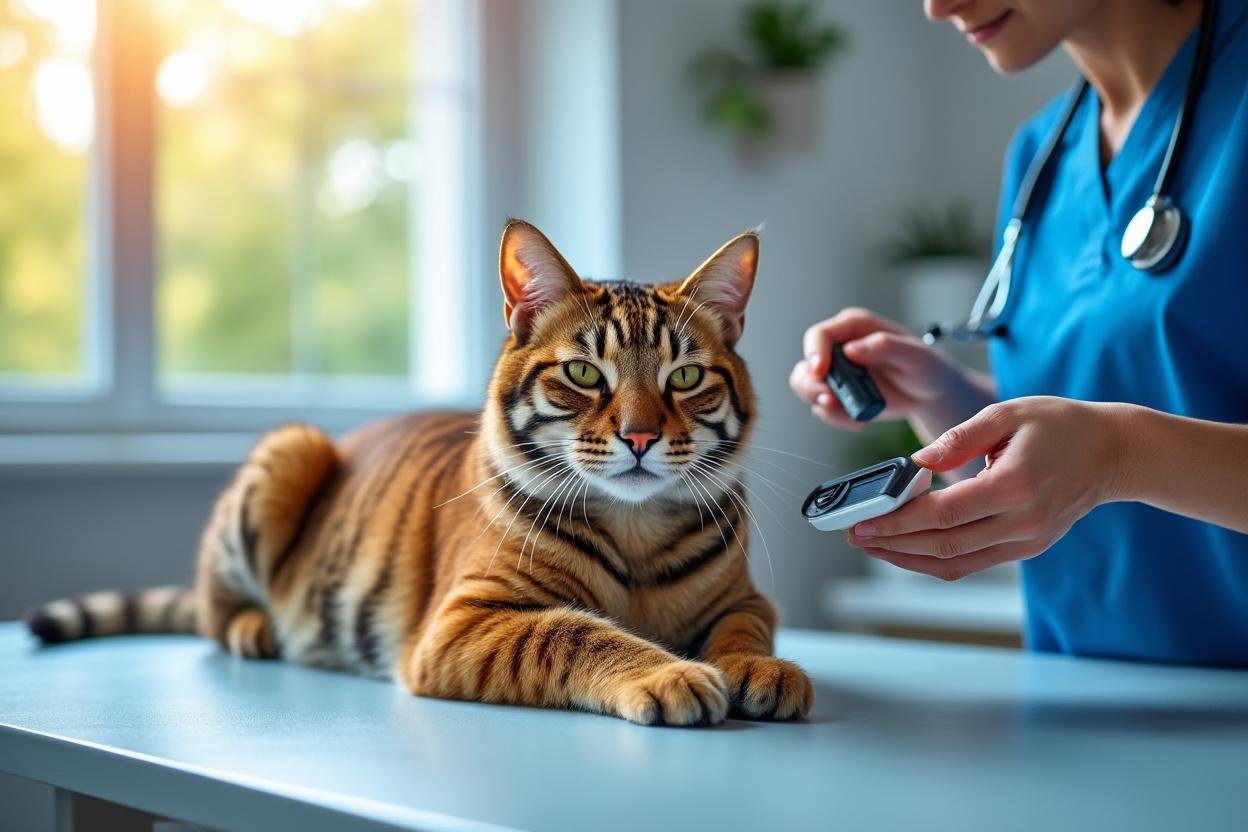
When a lost cat is found by third parties or taken to the vet, reading the chip allows the owner to be identified in a few minutes. The return is often immediate when an I-CAD record is updated.
Inserting the chip reduces anxious times for families and avoids time-consuming and costly searches. This also limits the risk of unauthorized adoption by a third party who cannot prove ownership.
Travel abroad and formalities
To travel with a cat, microchip identification is often required to establish a European passport, receive health certificates and obtain entry permits depending on the country. The chip is therefore a frequent requirement for international travel.
Without identification, procedures become more cumbersome and the cat may be refused boarding or quarantined depending on the host country’s regulations.
Impact on insurance and pensions
Childcare institutions, pensions and some health insurance policies require registered identification. It’s a way for these facilities to quickly verify the animal’s identity and health history.
In the event of a disaster or boarding care, an updated chip facilitates reimbursements and administrative management, because owner and cat information is immediately accessible.
Procedure and costs associated with chipping
Here’s how the setup happens, what you need to plan for financially, and how the data is stored.
The procedure at the vet
The chip is placed by a veterinarian. The procedure consists of a subcutaneous injection of the transponder, generally without anesthesia, and lasts a few seconds. The most common area is between the shoulder blades.
After implantation, the veterinarian reads the chip to verify its functioning, notes the number and gives the owner a summary document. The number must then be recorded in the national I-CAD filewhich allows veterinary monitoring of the cat.
Costs and registration at I-CAD
The average cost to install a chip is between 60 and 80 €depending on the clinic and region. This price generally includes the deed, reading and identification.
The chip number is transmitted to I-CAD for registration, ensuring that shelters, vets and official services can find your data if necessary. It is important to keep your contact details on file up to date.
To quickly compare information and costs, here is a useful summary table.
| Element | Detail |
|---|---|
| Recommended age | Installation for 2-3 months, mandatory before 7 months |
| Average cost | From 60 to 80 € (variable depending on the clinic) |
| Registration | Number saved in the I-CAD file |
| Sanction in case of absence | Fine of up to 750 euros |
| Current identification rate | About 50% of cats in France |
Useful tips for microchipping your cat
As a veterinarian, I offer you simple advice to best organize the facility and administrative management.
When to chip
I recommend taking advantage of the first veterinary visit, around 2-3 months, to place the chip at the same time as the vaccines. This avoids additional trips and limits the cat’s stress.
If your cat has not yet been identified and is over 7 months old, don’t waste time. Identification must be carried out quickly if the cat is subject to legal obligation, and this increases the chances of finding it if lost.
Identification for indoor cats and comparison of quotes
Even for a cat that doesn’t leave the house, identification is still recommended. Accidents and oversights happen, and a cat living indoors can escape or be caught by accident. A chip protects the animal and simplifies procedures in the event of an accident.
To reduce the risk of escape and learn how to keep your cat in the garden, consult our practical advice.
Take the time to request a quote from different veterinarians, as prices can vary. Check what’s included (reading, document, I-CAD registration) and ask if the clinic offers free microchip checks on subsequent visits.
If you have specific questions about setting up, registering, or updating your contact information, I’m available to guide you step by step and help you best protect your companion. 😊
Latest posts

Adopt a small dog for free near Marignane: complete guide

Most expensive animal: what is its price? Discover the most expensive animals

How can I help my dog who barks when alone feel reassured?

Calming your cat’s heat with essential oils: what do you need to know?

I Regret Getting a Second Dog: What Should I Do?

How long can a rabbit go without drinking?

How does the Sarthe Animal Defense League protect hedgehogs?

Dog coughing as if he had something stuck: causes and solutions

How to easily recognize a carpenter wasp?