

Your cat meows constantly and you wonder why, I understand your concern. As a veterinarian, I often encounter these types of requests, and the possible reasons are different: request for attention, boredom, pain, stress or search for comfort. Understanding the source of the meowing allows you to take targeted action and avoid ineffective interventions that reinforce unwanted behaviors. 🐱🩺
Quick summary:
Your cat meows often, I will help you identify the cause, act at the right time and find calm in the house. 🐱
- Observe and note context, frequency and type of meowing, as well as appetite, grooming and activity.
- Ignore calls for attention without signs of pain: no looks, words, caresses or treats, from 7 to 14 days, for all members of the family unit.
- Reward calm just before the complaint: small treat or caress, immediate timing, then gradually distance yourself.
- Enrich the environment with scratching posts, perches, rotating toys and play bowls; plan 2 to 3 gaming sessions 5 to 15 minutes per day.
- To be consulted if it is new, nocturnal and intense, or associated with loss of appetite, lethargy, abnormal posture, especially in an older cat. 🩺
Why does my cat meow continuously?
Cats communicate through their voices to express needs or emotions. Frequent meowing may indicate hunger, a need for interaction, a search for reassurance, anxiety or distress. The nature and context of the vocalizations provide clues: plaintive meows, repeated calls, nocturnal howls or moans differ depending on the cause.
Observe the context, frequency and type of vocalization it’s the first step. Notice when this happens, what you were doing before, and whether other clinical signs appear, such as a change in appetite, grooming, or activity.
Identifying the cause avoids applying a single solution to different problems. For example, a bored cat does not react the same way as a cat in pain. When faced with a persistent meow, the goal is to analyze and then adapt the owner’s behavior and the environment in which the cat lives.
To distinguish boredom from medical causes, see tips for telling if your cat is bored.
Ignore the meows
Here is the first often recommended behavioral strategy, which is based on the logic of reinforcement.
The effect of attention
When you respond to a meow with words, a look, or a caress, you are providing a social reward. The cat quickly learns that vocalization produces a reaction. Responding systematically then reinforces the behavior and can install it in the long term.
It is important to distinguish meows that require attention from vocalizations related to pain. If the meowing occurs without other clinical signs and in a context of seeking interaction, extinction of the behavior through ignorance may be effective.
Discipline and timing
Ignoring a cat requires rigor: no words, no looks, no caresses and no treats when it meows. This strategy generally works for a period of time that can range from a few days to two weeks, sometimes longer depending on the age of the behavior.
We must remain consistent among all family members. A return to timely attention can undo progress. Patience and perseverance are the elements that allow the meowing to be extinguished by seeking attention.
Reward calm
Instead of punishing him, you need to direct the cat towards the desired behavior by reinforcing periods of silence.
How to praise and use treats
Give a treat or treat when the cat is calm, just before he is likely to ask for it. The effect is to associate silence with positive attention. Use quality treats and small quantities to avoid excess weight.
Reinforcement must be immediate. If you wait too long, the cat will fail to make the connection between silence and reward. Timing is therefore critical for learning to be effective..
Frequency and association
To establish the association I recommend intervening 2 or 3 times a day, in quiet moments. These interventions allow you to create a behavioral «rule»: calmness attracts attention and not meowing.
Over time, you will reduce the frequency of rewards by favoring non-food social interactions, such as play sessions or petting, while maintaining signal consistency.
Enrich the cat’s environment
A mentally and physically stimulated cat meows less. Here are concrete solutions that limit boredom and promote well-being.
Climbing and observation facilities
Install scratching posts, wall shelves and perches near windows. These areas offer various observation points and resting places. The ability to climb and observe the outdoors reduces stress and boredom.
Suspended platforms and high hiding places create different territories. A cat that can change its point of view is generally calmer and less likely to loudly demand attention.
If you want your cat to stay in the garden, specific measures can help you protect the space: by keeping it in the garden.
Stimuli and games for the mind
Offer a variety of toys: balls, fishing rods, tunnels, open boxes. Simple hiding places, such as cardboard, are often very popular. Play bowls or kibble dispensers stimulate the search for food and prolong the activity.
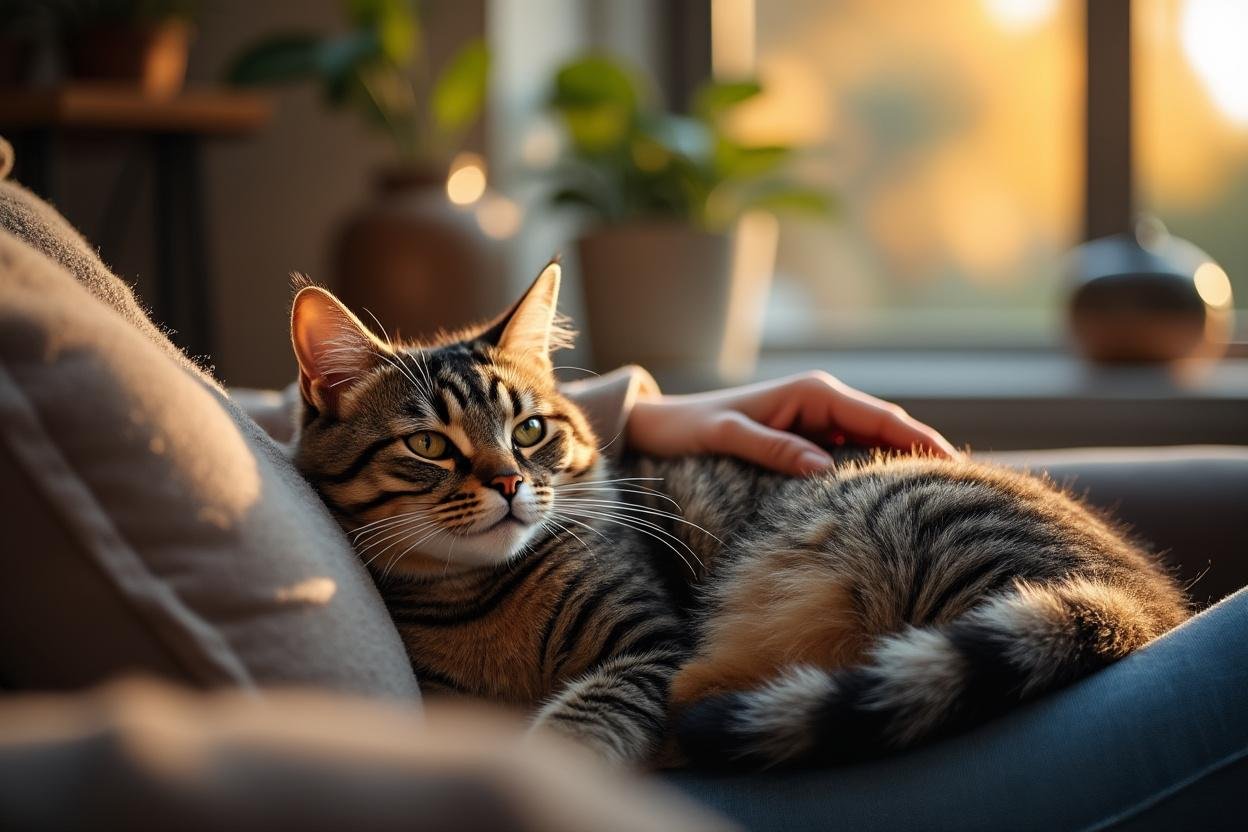
Alternative games and hideouts to renew interest. The diversity of stimuli prevents boredom and promotes sufficient mental expenditurewhich reduces frustration-related voice calls.
To help you quickly choose an appropriate action depending on the suspected cause, here is a summary table.
| Possible cause | Associated signs | Recommended actions | Observation time |
|---|---|---|---|
| Attention seeking | Meows when you are present, stops when touched | Ignore then reward calm, ritualize games | Days to 2 weeks |
| Boredom | Night activity, destructive games | Scratching posts, various toys, bowls | A few days |
| Pain or illness | Changes in appetite, grooming, posture, high-pitched vocalizations | Veterinary visit, complete evaluation | Immediate |
| Anxiety | Nocturnal meows, marks, runs away | Enrichment, rituals, behavioral support | Weeks |
Play and interact every day
The human-cat bond and regular interactions limit many vocalizations related to loneliness or excess energy.
Structured gaming sessions
Plan two or three play sessions a day, 5 to 15 minutes each, with a fishing pole or interactive toy. Playing games late in the day often helps reduce nighttime activity levels.
The types of exercise vary: simulated hunting, pursuit, exploration. Short, intense sessions mimic predation and tire the cat physically and mentally.
Rituals and proximity
Establishing a cuddle or play ritual before bed provides security. Cats adapt well to routine and this reduces anxiety related to absence.
Creating dedicated daily time strengthens the relationship and reduces vocal calls to fill an emotional gap. Watch for signs of overstimulation; some cats prefer short, calm contact.
Adapt your diet and environment
Simple dietary adjustments and some changes to home arrangements can reduce meowing related to hunger or boredom.
Food and bowls
Feeding a larger meal in the evening, delivered via a play bowl, helps some cats calm down. The dispensers delay access to the food and keep the animal busy.
Pay attention to diet quality and quantity. A large meal before night can reduce nocturnal hunger-related vocalizationsbut it does not replace mental enrichment.
Control hunger, stress or pain
If the meowing persists despite changes in habitat and routine, make sure it is not a sign of distress. Changes in appetite, lethargy or toileting problems require consultation.
Some complementary approaches, such as flower supports, are sometimes mentioned by owners, but they are not a substitute for a veterinary check. Medical care remains the priority in case of doubt.
Slightly changing furniture arrangements and creating new play paths breaks routine habits and can reduce automated voice calls.
Consult a vet
If the meowing does not stop despite your efforts, it is important to consult. As a veterinarian, I recommend a complete exam.
Veterinary follow-up for cats is an essential pillar of their health and well-being.
When to consult
Consult when meowing is accompanied by other clinical signs, rapid progression, or when the intensity interferes with the cat’s or family’s quality of life. Pain, hyperthyroidism in older cats, or other illnesses can cause abnormal vocalizations.
Don’t delay if the behavior is new, sudden, or associated with a physical change. Early evaluation prevents the condition from worsening.
What to ask the vet
Ask for a complete exam, blood tests if needed, and a discussion about behavior. The professional will be able to suggest further testing and refer you to a behavioral specialist if necessary.
Together we will establish a plan that combines medical care, environment and training. The goal is to treat the cause and provide lasting support for the owner and the pet.
In summary, to reduce constant meowing, start by observing and identifying the cause, combining selective ignoring with calm reinforcement, enriching the environment, creating play and feeding rituals, and seeing if the problem persists. With consistency and a comprehensive approach, most cases improve significantly. 😊
Latest posts

Adopt a small dog for free near Marignane: complete guide

Most expensive animal: what is its price? Discover the most expensive animals

How can I help my dog who barks when alone feel reassured?
Calming your cat’s heat with essential oils: what do you need to know?

I Regret Getting a Second Dog: What Should I Do?

How long can a rabbit go without drinking?

How does the Sarthe Animal Defense League protect hedgehogs?

Dog coughing as if he had something stuck: causes and solutions

How to easily recognize a carpenter wasp?