After cruciate ligament surgery in your dog, the period that follows requires rigorous and progressive attention to promote good healing. As a veterinarian, I know how stressful this time can be for owners; Here I propose concrete guidelines, taken from veterinary literature and clinical feedback, to organize convalescence step by step. 🐶❤️
Quick summary:
After cruciate ligament surgery, I offer you a clear rhythm to protect your knee and regain stable walking, step by step 🐶❤️.
- Supervised rest 1-4 weeks (sometimes up to 8): limited space, sanitary exits short leashno stairs or jumps.
- Wound clean and dry 10 days : Elizabethan collar, no bathroom; monitor redness/heat/flux → call if present.
- Pain under control : follow the dosage, no human drugs; antibiotics only if prescribed, respect the duration.
- Rehabilitation from S4 : gentle mobilisations, controlled walks, hydrotherapy if available; progress validated in consultation.
- Controlled weight + monitoring : dosed rations, omega-3; regular checks (x-rays if necessary). Usual shot 8-12 weeks.
Strict rest and restriction of movement
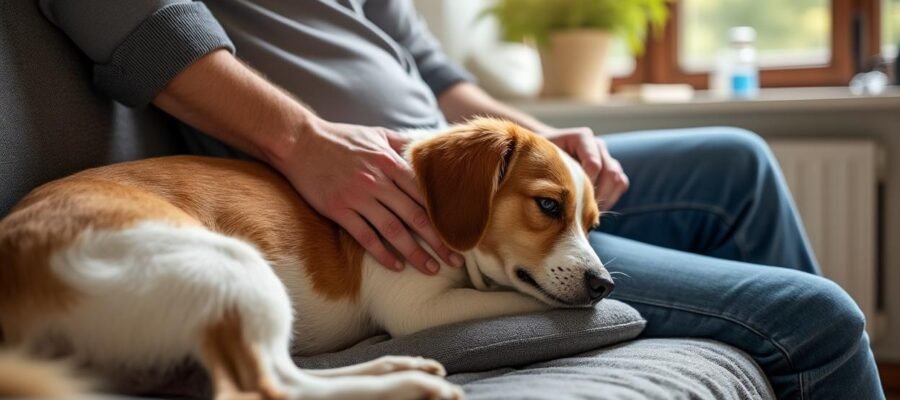
The first few weeks after surgery require significant rest. For many cases, the confinement phase varies from 1 to 4 weeks of very limited rest, but some protocols recommend up to 8 weeks of strict restriction depending on the surgical technique and severity of the injury.
During this period the dog must remain in a confined space (cage, indoor playpen or quiet room) to avoid jumping, running and level changes such as stairs. Outings are limited to physiological needs and are carried out on a short leash, calmly.
Each veterinarian adapts the duration of rest based on individual factors: age, weight, joint conformation and operating mode (TPLO, extracapsular, others). It is normal for the team to recommend a gradual progression rather than an abrupt return to activity.
To reduce the risk of complications, avoid rough play, slippery surfaces, and contact with other dogs during the initial stage. A safe environment limits relapses or premature efforts that delay recovery.
Wound monitoring and care
Daily monitoring of the operated area allows you to quickly identify inflammation, secretions or abnormal pain. The wound should be kept clean and dry : Avoid bathing for the first ten days unless otherwise directed by your veterinarian.
To avoid licking or scratching, the use of an Elizabethan collar or protective alternative is often recommended. These devices limit locoregional trauma and promote healing without saliva contamination.
The stitches or staples are usually removed between 10 and 14 days after surgery. This procedure is performed during a follow-up visit to evaluate the appearance of the suture and the quality of healing. If you notice redness, local heat, unpleasant odor or discharge, contact your vet immediately.
During treatment, do not use human products without advice: some antiseptic solutions are suitable, but their use should be guided by a professional to avoid delaying tissue repair.
Pain management and infection prevention
Medications after surgery have two goals: to relieve pain and prevent infectious complications. In general I prescribe analgesics and anti-inflammatories suitable for the species and the postoperative phase, with a precise protocol of duration and dosage.
Sometimes antibiotics are prescribed based on the surgical procedure and intraoperative risks; their use is aimed at reducing the risk of infection without overprescribing. Strictly respect the duration of treatment indicated by the veterinarian.
For medium and long-term joint protection, chondroprotectors (glucosamine, chondroitin, omega-3 fatty acids and other supplements) can be offered. These substances aim to support cartilage health and joint inflammation, but their effectiveness depends on the clinical context and should be discussed during follow-up.
Never give drugs to humans without advice: some human anti-inflammatories or analgesics are toxic to dogs. If pain seems poorly controlled, call the clinic again to reevaluate the analgesic protocol. Before changing a treatment, learn about the side effects of gabapentin.
Rehabilitation and progressive physiotherapy
From the fourth postoperative week, progressive rehabilitation becomes an important component of recovery. The goal is to strengthen peripheral muscles, improve joint range of motion, and restore a controlled functional gait.
Veterinary physiotherapy includes a variety of approaches : passive exercises (gentle mobilisations), isometric strengthening, pool work or hydrotherapy, anti-gravity treadmill, massages and electrotherapy according to availability. These methods reduce mechanical stress by stimulating the muscles.
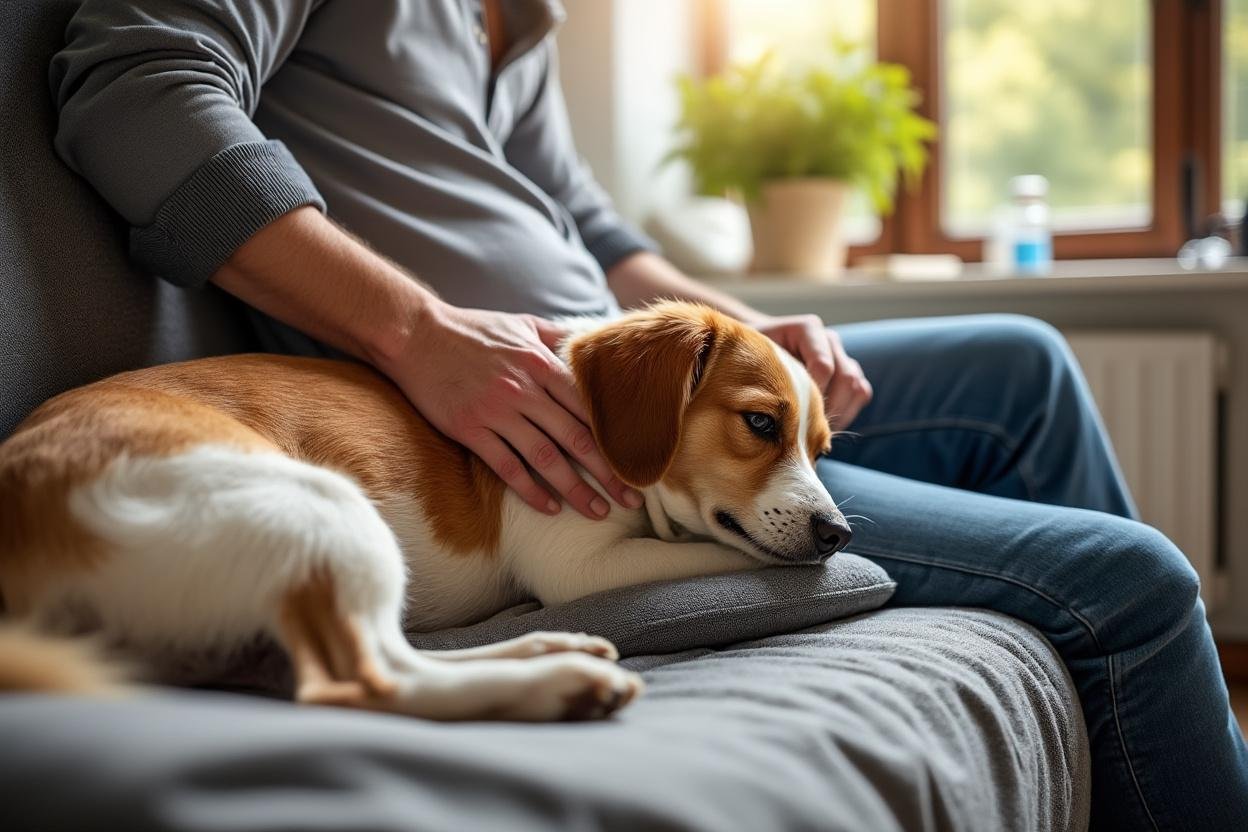
Walks should be short and supervised: rather than letting the dog run freely, gradually increase the duration and intensity under supervision. The introduction of the exercises takes place in several phases, always validated by the vet or canine physiotherapist.
Swimming is often helpful because it allows for resistance work without excessive pressure on the joint. Hydrotherapy controls load by promoting mobilization; it is recommended when available and adapted to the patient’s condition. 🏊♂️
Here is a summary table of a typical convalescence calendar to outline the phases.
| Phase | Approximate duration | Goals | Authorized activities |
|---|---|---|---|
| Strict repos | 1–4 weeks (sometimes up to 8) | Limit movement, initial healing | Sanitary exits on a short leash, confinement |
| Start of rehabilitation | 4–8 weeks | Muscle strengthening, progressive mobility | Controlled exercises, hydromassage, swimming |
| Reinforcement | 8-12 weeks | Regain functionality and resistance | Increased walking, progressive light training |
| Back to business | After 12 weeks (as appropriate) | Return to normal adapted activities | Monitoring, gradual resumption of games |
Weight control and proper diet
The weight directly influences the load on the operated joint. Maintain an adequate body index reduces mechanical stress and promotes functional healing.
In cases of overweight, a therapeutic diet often finds its place: measured rations, low-calorie foods but rich in quality proteins and micronutrients, accompanied by a progressive exercise plan. Your vet may suggest a weight loss goal and monthly monitoring.
In addition to calorie restriction, choose a balanced diet containing omega-3 fatty acids, antioxidants and proteins suitable for supporting tissue repair. Supplements may be included if recommended by your healthcare team. Before adding a supplement, learn about products like spirulina and their potential risks.
Remember to watch out for treats and table scraps – hidden calories can undermine weight reduction efforts and prolong recovery.
Regular veterinary check-up
Follow-up consultations are essential to adapt the rehabilitation protocol, verify healing and carry out further tests if necessary. Follow-up x-rays may be needed to evaluate bony union and alignment.
Blood tests can sometimes help in evaluation; Check out our guide on interpreting blood tests in dogs.
Full recovery time is often between 8 and 12 weeksbut it can extend depending on age, conformation and operating technique. Some dogs recover more quickly, others take several months to return to optimal function.
Don’t skip scheduled appointments: they allow you to anticipate complications and adapt treatments, exercises and diet. If any unusual signs appear (persistent lameness, fever, local lump), contact us quickly.
During visits, take the opportunity to ask questions about your progress and request a demonstration of exercises to replicate at home. Good communication between you, your vet, and your physical therapist improves outcomes.
Patience and individual adaptation
Every dog has its own recovery pace. Some return to normal activities within a few weeks, others require a long and steady progression. Daily monitoring and personalized adjustment they are crucial for a good functional result.
Pay attention to signs of discomfort: change in appetite, withdrawal, worsening lameness, swelling or pain to touch. These elements justify a re-evaluation by the veterinarian to exclude complications.
I encourage you to maintain open communication with your healthcare team; I know how difficult it is to remain patient when you love your pet. With time, adequate rehabilitation, and careful management, most dogs return to a fulfilling active life. 🩺
In summary, recovery after cruciate ligament surgery requires rest, local care, targeted drug treatment, progressive rehabilitation, weight control and regular follow-ups, all tailored to the individual. If you have specific questions about your dog’s protocol, I am available to assist you step by step.
Latest posts
Adopt a small dog for free near Marignane: complete guide

Most expensive animal: what is its price? Discover the most expensive animals

How can I help my dog who barks when alone feel reassured?
Calming your cat’s heat with essential oils: what do you need to know?
I Regret Getting a Second Dog: What Should I Do?

How long can a rabbit go without drinking?
How does the Sarthe Animal Defense League protect hedgehogs?
Dog coughing as if he had something stuck: causes and solutions
How to easily recognize a carpenter wasp?