

Lipomas are common fatty masses in dogs, often discovered during a routine physical or examination. As a veterinarian, I regularly see owners concerned about a “fat ball”; I will explain what it is, how to recognize the signs that require veterinary attention and what measures to take to manage and prevent these benign tumors 🐶🩺.
Quick summary:
Lipomas in dogs are often benign, a veterinary evaluation and one regular monitoring helps prevent complications and keep your partner comfortable 🐶🩺.
- Identify the typical mass: under the skin, soft, mobile, painlessfrom a few mm to several cm.
- Immediately check whether the mass grows rapidlybecomes painful, red or hot, drains or if lameness, tiredness or loss of appetite appears.
- Key exams: fine needle aspiration to confirm, imaging (ultrasound, scanner, MRI) if deeply affected.
- Treatment: surgery whether discomfort, pain, ulceration or diagnostic doubt, with a generally very good prognosis after complete excision.
- Monitoring and prevention: I recommend monthly palpation with dated photos and weight control through an adapted diet and regular activity.
Understanding Lipoma in Dogs
Before going into detail, it is useful to lay the foundations for distinguishing simple forms and deeper variations.
Definition of lipoma
A lipoma is a noncancerous tumor composed ofadipocytesadipose tissue cells. It grows under the skin, forming a mass that is usually soft, mobile and painless to the touch.
These masses are often called fat ball or subcutaneous mass. In most cases they do not cause discomfort to the animal, but their presence deserves an evaluation to exclude other more worrying lesions.
Classification of lipomas
There are different types of lipomas. The most common are simple, superficial and well-demarcated lipomas, which remain isolated in the subcutaneous tissue.
Infiltrating lipomas, which are rarer, invade the muscle planes and can make surgical treatment more complex. It is also important to keep in mind the need to exclude malignancies such as liposarcoma through further testing.
Why do lipomas form in dogs?
Understanding the factors that promote lipoma formation helps guide preventive and surveillance actions.
Risk factors
Genetics play an important role. Some breeds show a predisposition and a family history increases the likelihood of the appearance of fat masses.
Age is another factor. Older dogs, especially overweight ones, develop lipomas more frequently. The combination of advanced age and excess weight increases the risk.
Among the elements to consider we find:
- racial predisposition,
- family history,
- overweight and obesity,
- advanced age.
Relationship with obesity
There is a clear link between excess weight and the formation of lipomas. Excess adipose tissue modifies the local microenvironment and can favor the proliferation of adipocytes.
Acting on diet and physical activity therefore has a double benefit: improving the dog’s general well-being and reducing the risk of the appearance of new masses. Balanced nutrition and regular activity remain effective levers.
Symptoms to watch out for
Most lipomas are silent, but there are some signs that should get your attention right away.
Description of typical symptoms
The most common sign is the appearance of a subcutaneous mass, often well defined, soft and painless on palpation. These masses can range from a few millimeters to several centimeters.
In some cases, lipomas can grow to a significant size, up to 20 cm, and begin to compress nearby muscles or organs, which can affect the pet’s mobility and comfort.
As for signs to watch out for
If the mass changes appearance, grows rapidly, becomes painful, red or warm to the touch, it is necessary to consult. These changes may indicate a complication or another nature of the tumor.
General symptoms such as marked fatigue, loss of appetite or lameness associated with the presence of a mass require prompt evaluation by your veterinarian. Consult quickly if these signs appear.
Risks and complications of lipomas
Although generally benign, lipomas can sometimes cause significant local consequences depending on their size and location.
Potential complications
A large lipoma can put pressure on nerves and joints, causing pain and lameness or limit movement. Compression of the vessels can also lead to swelling of the affected limb.
Infiltrating lipomas pose a surgical challenge because they extend into adjacent muscles and tissues. Their removal may require more extensive surgery and carries a greater risk of recurrence.
Irritation and risk of infection
Lipomas located in areas of friction, such as under the armpits or on the limbs, can become irritated. Repeated irritation can lead to cracked skin, inflammation, or secondary infection.
If the mass ruptures, bleeds, or leaks, it is important to treat the infection promptly to avoid local worsening and systemic complications.
Diagnosis and treatment
The diagnosis is based on clinical examination and, if necessary, further testing to confirm the nature of the mass.
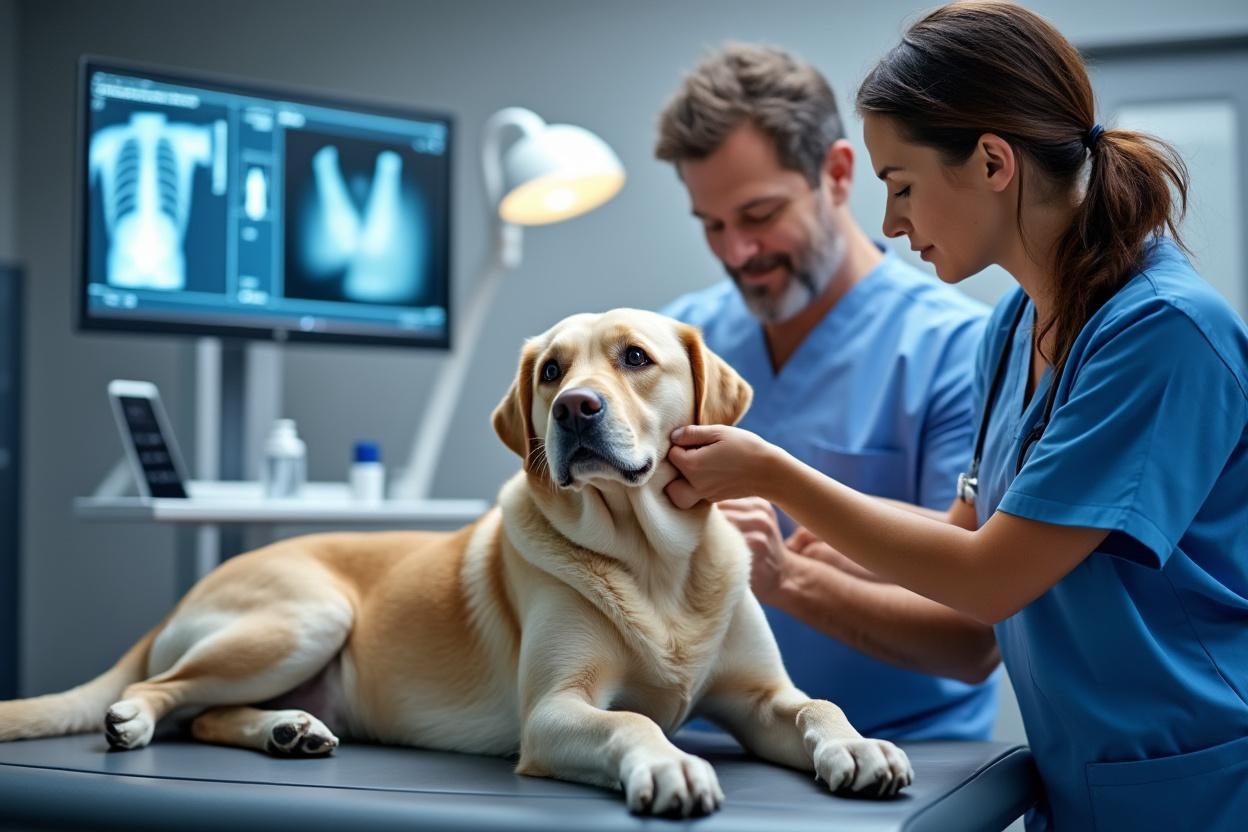
Veterinary consultation
During the visit I will evaluate the mass by palpation, its adhesion to the deep levels and its painful nature. These observations guide the tests to be carried out.
Possible tests include fine needle aspiration for cytology, biopsy if cytology is inconclusive, and imaging tests such as ultrasound or X-ray. For deep forms, a CT or MRI may be needed to visualize extension and implantation into the tissues.
Blood tests can sometimes complete the evaluation.
Treatment options
The primary treatment is surgical when the mass interferes with function, becomes painful, ulcerates, or presents diagnostic concerns. The ablation is performed under anesthesia, with adequate recovery and follow-up.
THE the prognosis is generally excellent after complete removal, but it is common for other lipomas to appear later in susceptible dogs. The decision to remove a mass takes into account the impact on quality of life, anesthetic risks and location.
Here is a summary table to compare situations, tests and treatment options.
| Situation | Signs | Recommended exams | Treatment | Followed up |
|---|---|---|---|---|
| Simple cutaneous lipoma | Soft, mobile, painless masses | Fine needle aspiration, palpation | Monitoring or excision if bothersome | Regular palpation, photo |
| Infiltrating lipoma | Fixed mass, possible functional impairment | Ultrasound, CT scan or MRI | Extensive surgery, preoperative planning | Tight postoperative control, risk of recurrence |
| Irritated or infected lipoma | Redness, pain, discharge | Clinical examination, cytology, bacterial sampling if necessary | Medical treatment (antibiotics), ablation in case of recurrence | Follow-up for healing and prevention |
Monitoring and prevention
Continuous vigilance and preventive measures reduce the impact of lipomas on the dog’s life.
Surveillance continues
After a diagnosis or surgery, I recommend regularly monitoring the affected sites. Palpate the areas at monthly intervals and note any changes in size, texture, or appearance.
Photographing masses at regular intervals is a simple and effective method to objectify evolution and facilitate discussions during follow-up consultations.
Preventive
Weight control is an important measure to limit the appearance of new fat masses. An adequate diet and an exercise program suited to the dog’s age and health status help keep adipose tissue in balance.
For dogs of predisposed breeds, enhanced monitoring and regular checks allow for early diagnosis. Prevention also requires a relationship of trust with the veterinarian, who will guide food and activity choices.
Importance of regular consultation
I encourage you to consult immediately if you notice a significant change. Early treatment often allows you to avoid more serious interventions and preserve your partner’s comfort.
During health visits, take the opportunity to discuss weight management, lifestyle habits, and signs to watch out for. Together we can adapt measures to reduce risks and ensure a good quality of life for your dog 🐾.
In summary, lipomas are often benign, but proper monitoring and care can limit complications and improve your pet’s comfort. Don’t hesitate to contact me if you have any doubts, I’m here to support you.
Latest posts

Adopt a small dog for free near Marignane: complete guide

Most expensive animal: what is its price? Discover the most expensive animals

How can I help my dog who barks when alone feel reassured?

Calming your cat’s heat with essential oils: what do you need to know?

I Regret Getting a Second Dog: What Should I Do?

How long can a rabbit go without drinking?

How does the Sarthe Animal Defense League protect hedgehogs?
Dog coughing as if he had something stuck: causes and solutions
How to easily recognize a carpenter wasp?