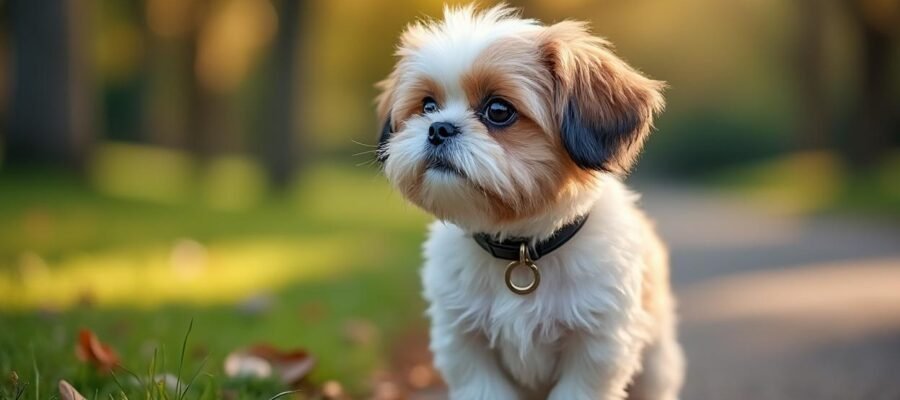
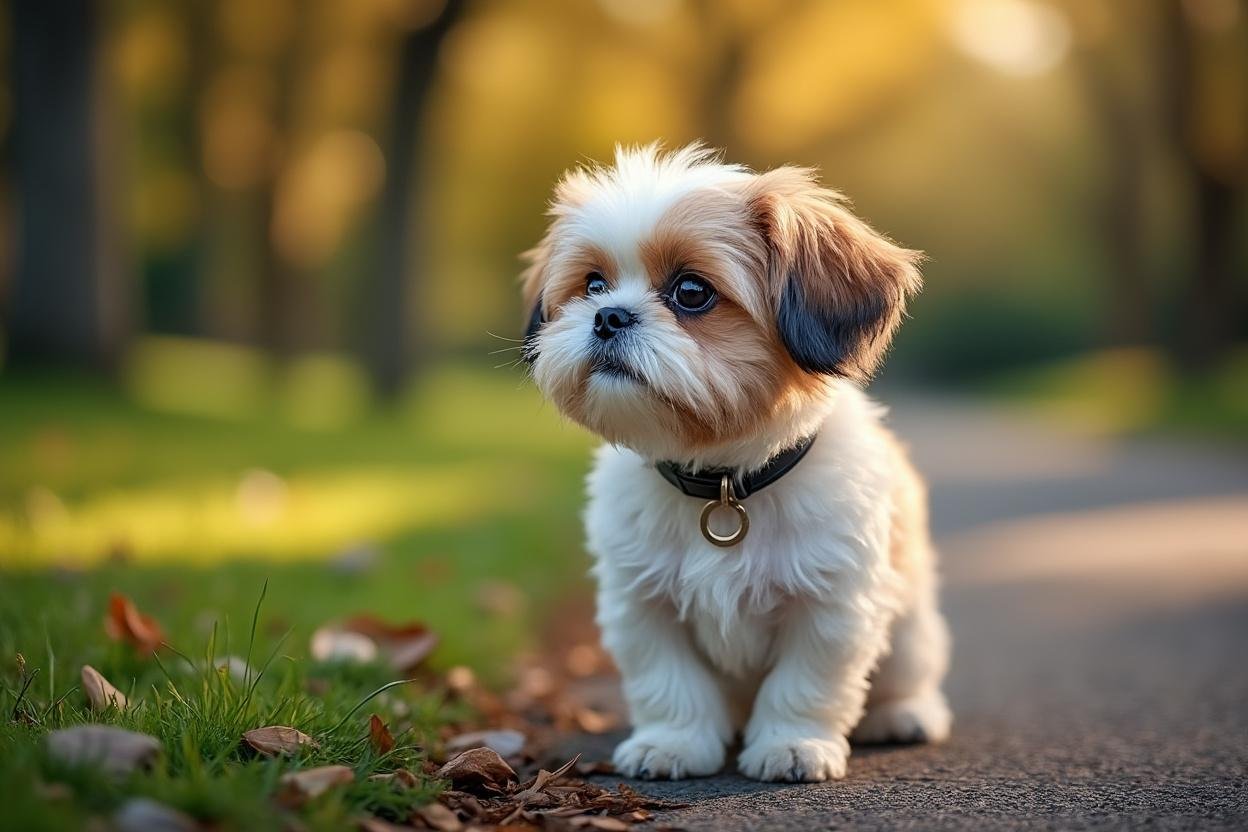
Teaching your shih tzu to walk on a leash without pulling will turn the walk into a calm time for both of you. As a veterinarian, I often see owners stressed by jerky walks; adapted education changes everything, for the safety, well-being and relationship you share with your little companion 🐶❤️.
Quick summary:
Teach your shih tzu to walk without pulling for calmer, safer outings and a stronger bond 🐶❤️.
- Start in one place calm and familiar ; fewer distractions = better concentration.
- Choose one harness with chest clip + leash 1.2–1.5 m ; avoid the retractable leash.
- Apply the method “stop as soon as he shoots” : we stop, we start again as soon as the leash loosens.
- Reward immediately take quiet steps (scented treats, soft voice) then space out the rewards.
- Do sessions 5-15 minutesalternate controlled walking and pauses to smelland notice the progress 📒.
Why teaching your shih tzu to walk on a leash without pulling is important
Going on a leash is not just a formality: it protects your dog from urban dangers (traffic, toxic vegetation, fights) and preserves your physical integrity when you are in public. If objects are ingested while walking, please see our page on the risks if my dog swallowed a chewed bone.
Controlled walking reduces the risk of injury for you and your shih tzu, especially for a compact and sometimes fragile breed at a cervical and respiratory level.
In addition to safety, walking without traction builds mutual trust. When your dog learns to walk by your side, the handler-dog relationship is consolidated : you become a calm reference and the shih tzu consults your gaze and your indications more.
Finally, a pleasant walk increases the dog’s physical activity, olfactory and mental stimulation, reducing stress, boredom and problematic behaviors at home.
The basics of leash walking education
Before starting it is important to establish some simple guidelines so that learning is effective and respectful.
Leash walking is defined as learn to move calmly alongside the owner without tension on the leash. The goal is for the dog to walk in harmony with you, neither forward nor backward, but aligned with your rhythm.
Three key elements should guide your approach: patience, consistency, and positive reinforcement. These principles come from behavioral science and allow you to gradually transform an unwanted habit into a peaceful routine.
I invite you to favor short, regular sessions and always based on rewarding the desired behavior rather than punishment.
Step 1: Prepare the environment
The choice of location plays an important role during the first learning sessions.
To start, select quiet places, such as a fenced garden, a quiet driveway, or an empty park in the morning. The less stimulation there is, the faster your shih tzu will be able to focus on you.
Choose quiet places that are not very distracting
Start in a place that is familiar and quiet most of the time. This allows the dog to associate exercise with a comforting situation rather than excessive stimulation.
If possible, repeat the session several times in the same place. Routine helps the Shih Tzu incorporate expected behavior without sensory overload.
Reduce distractions at the beginning of learning
Avoid noisy areas and places where other dogs or animals frequently pass. Sounds, smells and movements can distract your dog’s attention and make learning difficult.
If a distraction occurs, reduce the intensity of the session: call your dog back, offer him a treat and resume the exercise when calm returns. Progressivity is more productive than comparison.
Step 2: Bring the right materials
Equipment directly influences the comfort and effectiveness of sessions.
An appropriate harness and a good length leash facilitate control without harming the shih tzu’s well-being.
Choose a suitable harness
For a shih tzu, I recommend a harness with a chest clip. This type of harness distributes traction and limits tension on the neck, which is preferable given the small morphology of the breed.
A properly fitted harness should be comfortable without chafing. Check the friction points regularly and adjust the straps if necessary to avoid irritation and discomfort while walking.
Tips on leash length
A leash of around 1.2-1.5 meters offers a good compromise between freedom and control. Avoid leashes that are too short that limit movement, as well as elastic leashes that encourage pulling and reduce your ability to stabilize your dog.
Use the same leash for the first few sessions to build a habit. If you change, gradually reintroduce the new setup so the shih tzu adapts.
To clarify your hardware choices, here is a simple comparison table of common options and their recommended usage.
| Material | Advantage | Limit |
|---|---|---|
| Chest harness | Control without cervical pressure | Can encourage traction if adjusted poorly |
| Rear harness | Convenience for short walks | Less control in strong traction |
| Standard leash (1.2–1.5 m) | Good balance of freedom/control | May appear short in open areas |
| Retractable leash | It gives more space | Reduces control, increases risk |
Step 3: Use rewards and positive reinforcement
Positive reinforcement accelerates learning by associating the desired behavior with a pleasant consequence.
I advise you to experiment with different rewards to find the one that motivates your shih tzu the most: small treats, caresses or toys can work depending on the dog’s character.
Which rewards to use
Small, strong-smelling treats are often the most effective at grabbing attention while walking. Prepare bites that are easy to swallow so as not to interrupt progress.
Cuddles and kind words work well when the dog is already sensitive to your presence. For some shih tzus, a favorite toy will be more engaging than treats.
When to reward
Give the treat immediately after the dog walks calmly alongside you. Timing strengthens the connection between action and consequence.
Reward frequently at first, then gradually space out to establish the behavior long-term. Every success deserves to be celebrated to keep you motivated.
Step 4: Teach your Shih Tzu not to pull
The most widespread and effective method is based on immobilization during traction.
It’s about teaching the dog that pulling on the leash doesn’t lead to moving forward, while staying relaxed allows him to continue the walk.
Immobilization method
As soon as the leash becomes tense, stop calmly. Don’t shoot back or scream. Wait for the tension to calm down, then praise and start walking again.
This approach must be applied consistently: if you sometimes give in and let the dog advance by pulling, the message becomes confused and learning slows down.
Why this method works
In this way a logical and understandable consequence is established for the dog: traction blocks progress. The desired behavior is then reinforced by direct experience.
Over time, the Shih Tzu will associate walking without tension with the pleasure of moving forward and will develop a calmer and more focused habit.
Step 5: Take your time and be patient
Progression is not linear: expect gradual progress rather than instant mastery.
I invite you to increase the number of short sessions (from 5 to 15 minutes) rather than taking long training walks which tire the dog and reduce his concentration.
Multiply the short sessions
Frequent but short sessions keep the shih tzu’s attention and limit frustration. This allows you to establish positive habits without overloading your learning capabilities.
Over the weeks, increase the length and difficulty of the sessions by gradually introducing distractions or new environments.
Remain patient and consistent
If a session is more difficult, go back to easier exercises until your dog finds success again. Consistency of rules between each walk is more important than the intensity of a single session.
I encourage you to keep track of progress – this helps you stay on track and adjust goals realistically for your partner.
Step 6: Let your dog explore
Allowing exploration is beneficial to the shih tzu’s mental well-being and makes walking more rewarding.
However, it is useful to find a balance between freedom and control to avoid exploration becoming an excuse to shoot without limits.
Importance of smelling and exploring
Sniffing is an essential cognitive activity for dogs: it provides them with information, reassures them and stimulates them. Allowing this promotes a more relaxed and content dog.
Build in regular breaks where you let your shih tzu sniff around for scents. This can reduce the urge to pull on the leash to reach a source of interest.
Balancing exploration and control
Walking phases alternated with exploratory breaks. For example, five minutes of controlled walking, then a minute of sniffing, then regain control.
If your dog starts to get carried away during the exploration, refocus him with a treat or verbal reminder, then allow the break again once calm is restored.
Step 7: Evaluate progress and adapt methods
Observing and adapting are regular steps to maintain learning effectiveness.
Each dog learns at its own pace; the important thing is to pay attention to the behavioral and physiological signs of the shih tzu.
Track progress
Record successes and difficulties: location of session, duration, level of distraction, type of reward. This allows you to identify what works best for your dog.
Spot simple indicators: less pulling, more attention to your face, ability to respond to reminders. These signs show a gradual improvement.
Adapt according to the dog’s needs
If a protocol becomes stagnant, tweak it slightly: change the reward, reduce distractions, or split the steps more. The goal is to adapt, not multiply contradictory techniques.
Listen to your shih tzu: Fatigue, stress or pain can slow down learning. When in doubt, a veterinary consultation can rule out an underlying medical problem. If your dog shows aggressive behavior, do not hesitate to consult specialized resources and request the appropriate support.
In summary, structure your sessions around regularity, material comfort and positive reinforcement. With patience, a clear strategy and thoughtful attention, the walk will become a moment your shih tzu looks forward to. Have a nice walk and enjoy these moments of company 🐾😊
Latest posts
Adopt a small dog for free near Marignane: complete guide
Most expensive animal: what is its price? Discover the most expensive animals

How can I help my dog who barks when alone feel reassured?

Calming your cat’s heat with essential oils: what do you need to know?
I Regret Getting a Second Dog: What Should I Do?
How long can a rabbit go without drinking?
How does the Sarthe Animal Defense League protect hedgehogs?
Dog coughing as if he had something stuck: causes and solutions
How to easily recognize a carpenter wasp?